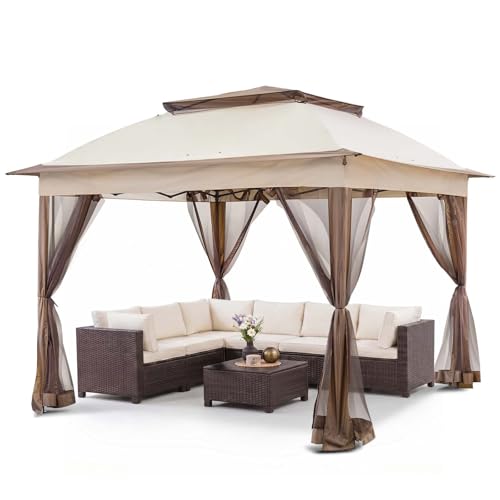
The best screened gazebos balance a rigid, weather-resistant frame with tightly woven mesh, enough roof overhang for rain protection, and a size that leaves practical room for furniture rather than merely fitting the stated footprint.
As an Amazon Associate we earn from qualifying purchases at no extra cost to you.


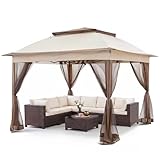
Our Top Picks
 Aoxun Gazebo 10x12 Hardtop Gazebo with Double Galvanized10' x 12'144 x 120 x 116.5 Inches199.5 poundsCheck on Amazon


Top 3 picks at a glance
Quick Picks by Situation
| Your situation | Best specification to target | Why it fits |
|---|---|---|
| Small patio or balcony-adjacent area | 8 × 8 ft, steel or aluminum frame, zippered mesh | Uses less space and is usually manageable for two people to assemble |
| Four-person dining area | 10 × 10 ft, powder-coated steel, roof vent, 110–150 gsm canopy | Provides useful circulation space around a table and chairs |
| Large family gatherings | 12 × 12 ft or 12 × 16 ft, reinforced steel, removable walls | Allows separate dining, serving, and walking zones |
| Windy or coastal location | Aluminum or heavy-gauge steel, anchored legs, vented double roof | Reduces corrosion and gives wind pressure somewhere to escape |
| Occasional seasonal use | Pop-up steel model with replaceable mesh panels | Faster setup and easier storage than a permanent structure |
Choose the Right Gazebo Size
Gazebo dimensions describe the outer frame, not the usable living area. Posts, curtains, sloping eaves, and furniture can reduce the practical space by several inches on every side. A 10 × 10 ft gazebo offers 100 square feet on paper, but the comfortable central area may be closer to 8 × 8 ft once the legs and sidewalls are accounted for.
- 8 × 8 ft: Suitable for two lounge chairs, a small bistro table, or a compact grilling area. It can feel crowded with a full dining set.
- 10 × 10 ft: The most versatile size for four people, a 48–60 inch table, or a modest seating arrangement.
- 12 × 12 ft: Better for six to eight people, larger furniture, or a dining table with walking space.
- 12 × 16 ft: Useful for entertaining, but it needs a genuinely level site and stronger anchoring. It is also more difficult to move and store.
Allow at least 24 inches of clearance around the outside for access, guy lines, drainage, and opening doors. Before buying, mark the intended footprint with tape or stakes. Then place cardboard rectangles where the table and chairs will sit. This exposes cramped layouts more reliably than comparing advertised square footage.
Frame Materials: Steel Versus Aluminum
Steel
Steel frames normally provide more mass and stiffness for the money. That helps a gazebo feel stable when mesh walls catch gusts, and it supports larger roofs without excessive flex. Look for powder-coated or corrosion-resistant steel, welded corner joints, and legs that do not feel unusually thin.
The disadvantages are weight and rust risk. Scratches, chipped coating, and trapped water at tube joints can eventually cause corrosion. In damp or salty environments, inspect the frame after storms and dry it before long-term storage.
Aluminum
Aluminum is lighter, easier to carry, and naturally more resistant to rust. It is a strong choice for seasonal setups or locations where two people must move the gazebo frequently. However, thin aluminum tubing can bend more readily than a substantial steel frame, particularly on larger models.
For a 10 × 10 ft gazebo, a well-braced aluminum frame can be preferable to poorly protected steel. For a 12 × 16 ft structure, prioritize the manufacturer’s tube dimensions, corner reinforcement, and anchoring provisions rather than choosing by material name alone.
Mesh Quality and Privacy
Screening serves three different purposes: stopping insects, reducing glare and wind, and blocking views. A fine mesh may improve privacy and bug protection, but it also restricts airflow more than an open-weave screen. Product listings often emphasize “mesh walls” without explaining the weave, attachment method, or replacement options.
- Fiberglass mesh: Common, flexible, and relatively inexpensive. It can tear if caught by furniture or sharp hardware.
- Polyester mesh: Often stronger and more abrasion-resistant, especially when finished with reinforced edges.
- Privacy mesh: Denser fabric that blocks more side views but can increase heat buildup and wind loading.
- Separate curtains and screens: The most flexible arrangement. Screens provide ventilation while solid curtains add privacy or rain protection when needed.
Examine how the panels attach. Full-length zippers generally seal insects out more effectively than loose hook-and-loop overlaps. A weighted bottom edge reduces flapping. Reinforced corners matter because that is where tension concentrates. If the gazebo will remain outside for months, replacement availability is more important than a slightly cheaper initial price.
Wea
Frequently asked questions
How much clearance should I leave around a screened gazebo?
Leave at least 24 inches of clearance around the outside. This space helps with access, guy lines, drainage, and opening doors. Before buying, mark the footprint with tape or stakes and use cardboard rectangles to map where furniture will go; this can reveal a cramped layout more reliably than comparing advertised square footage.
What should I check before setting up a gazebo on my patio?
Check that the site is level and that the planned footprint leaves room for access and furniture. Posts, curtains, sloping eaves, and furniture can reduce the usable area by several inches on every side. Mark the footprint and furniture positions first so you can see whether the arrangement fits comfortably.
How can I keep insects from getting through the screen panels?
Choose panels with full-length zippers, which generally seal insects out more effectively than loose hook-and-loop overlaps. A weighted bottom edge can also reduce flapping, and reinforced corners help where tension concentrates. Check whether replacement panels are available if the gazebo will remain outside for months.
Can screened gazebo panels provide privacy without making the space too hot?
They can, but denser privacy mesh may increase heat buildup and restrict airflow more than open-weave screen. Separate screens and curtains offer more flexibility: screens provide ventilation, while solid curtains can add privacy or rain protection when needed.
What should I do to reduce rust risk on a steel gazebo?
Choose corrosion-resistant or powder-coated steel, and inspect the frame after storms, especially if it is in a damp or salty environment. Scratches, chipped coating, and water trapped at tube joints can lead to corrosion. Dry the frame before long-term storage.