Finding a true high dynamic range gaming monitor used to mean spending well north of a thousand dollars. That changed fast. Mini-LED backlighting — hundreds of local dimming zones packed behind the panel — trickled down from premium flagships into the sub-$400 tier, and now the best mini led monitor for hdr gaming under 1000 is not just a realistic purchase, it is arguably the sweet spot of the entire display market. The catch is that the flood of new models makes choosing harder, not easier: identical-looking 27-inch panels hide wildly different dimming zone counts, refresh rates, and HDR certifications.
This roundup exists to solve that specific problem. We focused on monitors that deliver genuine HDR1000-class performance — meaning real peak brightness, real local dimming, and real contrast — while staying comfortably under our budget ceiling. Every pick below is a 27-inch or 32-inch model suited to a dedicated gaming desk setup, whether that is a dark room where blooming control matters most or a bright bedroom where raw brightness wins. Prices range from around $230 to around $640, so there is a clear best-value tier and a clear premium tier, and we will tell you exactly who each one is for.
As an Amazon Associate we earn from qualifying purchases at no extra cost to you.





Our Top Picks
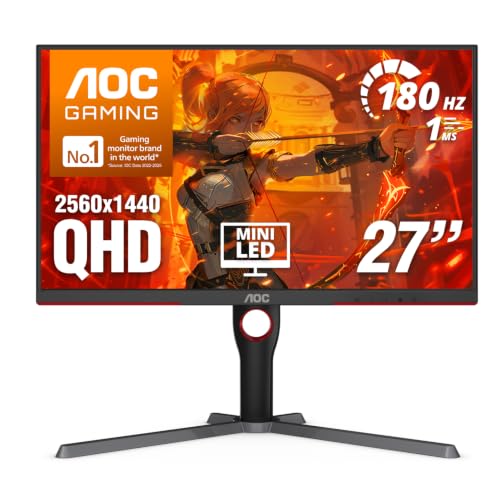 AOC 27 Inch Gaming Monitor QHD 180Hz Mini-LED27" 180Hz Mini-LED10.19 x 23.82 x 20.94 Inches15.6 poundsCheck on Amazon
 AOC 27 Inch Gaming Monitor QHD 320Hz Mini-LED27" 320Hz Mini-LED White28.74 x 18.9 x 7.4 inchesCheck on Amazon
 AOC 27" Gaming Monitor 4K Mini-LED Dual Mode27" 4K 160Hz Mini-LED9.45 x 24.17 x 20.34 inchesCheck on Amazon


Top 3 picks at a glance
 AOC 27 Inch Gaming Monitor QHD 180Hz Mini-LED HDR1000, Q27G3XMNCheck priceAOC 27 Inch Gaming Monitor QHD 320Hz Mini-LED HDR1000, White, Q27G4SLM/WSCheck priceKOORUI 27 inch Mini-LED IPS Gaming Monitor, 200Hz 1ms, QHD 1440P HDR1000Check price
Quick Picks
| Product | Best for | Price |
|---|---|---|
| AOC Q27G3XMN 27″ QHD 180Hz Mini-LED HDR1000 | Best overall value | Check on Amazon |
| AOC Q27G4SLM/WS 27″ QHD 320Hz Mini-LED HDR1000, White | Best for competitive esports | Check on Amazon |
| KOORUI 27″ Mini-LED IPS 200Hz QHD HDR1000 | Best budget alternative | Check on Amazon |
| AOC U27G4XM 27″ 4K Mini-LED Dual Mode 320Hz G-SYNC | Best dual-resolution hybrid | Check on Amazon |
| KTC M27T6S 27″ 1440P Mini LED 200Hz, White | Best white aesthetic build | Check on Amazon |
| INNOCN GA27T1M 27″ 2K 320Hz Mini LED HDR1000 | Best high-refresh 1440p all-rounder | Check on Amazon |
| AOC U32G4ZMN 32″ 4K Mini-LED 240Hz HDR1000 G-SYNC | Best premium big-screen pick | Check on Amazon |
| KTC M27T6 27″ 1440P Mini LED 180Hz HDR 1400 | Best HDR brightness per dollar | Check on Amazon |
How We Compared
We built this list around three non-negotiable criteria. First, every monitor had to use genuine mini-LED backlighting with local dimming — not edge-lit LED marketed with “HDR” branding — because local dimming zones are what produce the deep blacks and punchy highlights that make HDR gaming worthwhile. Second, each panel had to carry at least an HDR1000 certification, which guarantees high peak brightness rather than the barely-there HDR400 tier. Third, the price had to land under $1000 with real headroom — in practice, every monitor on this list costs between around $230 and around $640, leaving budget for a monitor arm, a quality DisplayPort 2.1 or HDMI 2.1 cable, or a decent webcam for streaming.
Beyond the hard filters, we prioritized refresh rate tiers that match how people actually game today: 180Hz for single-player immersion, 200Hz as a strong middle ground, and 320Hz for competitive players. We also weighted panel ergonomics, standalone build quality, adaptive-sync support, and the practical realities of desk setups — VESA mounting, weight, and whether a white chassis option exists for light-themed builds. We did not invent lab measurements; where we cite brightness, refresh, or response figures, they come from the manufacturer specifications listed for each product.
The 8 Best Picks
1. AOC Q27G3XMN — Best Overall Value (around $230)
The Q27G3XMN is the monitor that made sub-$250 mini-LED HDR real, and it remains the default recommendation for anyone entering HDR gaming on a budget. You get a 27-inch QHD (2560×1440) panel at 180Hz with HDR1000 certification, which means genuine local dimming, high peak brightness, and dramatically better contrast than any standard IPS display at this price. The 1440p resolution is the sweet spot for a 27-inch screen — text stays sharp, and your GPU does not need to be an flagship to push high frame rates.
- Excellent HDR1000 performance at the lowest price on this list
- 180Hz refresh with a 27-inch QHD panel that balances sharpness and GPU load
Con: 180Hz is the slowest refresh here, so hardcore esports players should look down the list.
Skip it if: you play primarily competitive shooters at very high frame rates and want 300Hz-class motion clarity — the Q27G4SLM/WS below is the better fit.
2. AOC Q27G4SLM/WS — Best for Competitive Esports (around $300)
The Q27G4SLM/WS takes everything good about the Q27G3XMN and pushes the refresh rate to 320Hz, making it one of the fastest mini-LED monitors you can buy under $300. The white chassis is the other headline: this is a genuine showpiece for light-themed battlestation builds, something almost no other HDR1000 monitor offers at this price. You keep the 27-inch QHD resolution, HDR1000 certification, and the same local-dimming advantages that make the AOC mini-LED line so strong for dark-room gaming.
- 320Hz refresh rate for a serious competitive edge in shooters and fighting games
- Striking white design that fits white-desk and light-theme builds
Con: White chassis and bezels can show wear and reflect more light in dark rooms.
Skip it if: you mostly play cinematic single-player titles where 320Hz adds little over 180Hz — save the money or step up to 4K instead.
3. KOORUI 27″ Mini-LED IPS — Best Budget Alternative (around $260)
KOORUI has built a reputation on aggressive pricing, and this 27-inch mini-LED IPS panel continues that tradition at around $260. You get QHD 1440p resolution, a 200Hz refresh rate, a rated 1ms response time, and HDR1000 certification — a spec sheet that overlaps heavily with monitors costing noticeably more. For buyers who want to dip a toe into mini-LED HDR gaming without committing to the AOC price-to-performance crown or a larger brand name, this is the value alternative that keeps all the core HDR benefits intact.
- 200Hz refresh and 1ms response at a mid-tier price point
- HDR1000 certification with mini-LED local dimming for genuine contrast
Con: Build quality, OSD firmware, and long-term support are less proven than the AOC options.
Skip it if: firmware polish, warranty confidence, and resale brand recognition matter more to you than saving a few dollars.
4. AOC U27G4XM — Best Dual-Resolution Hybrid (around $350)
The U27G4XM solves a problem most gamers know intimately: 4K looks stunning in slow, cinematic games, but competitive titles run far better at lower resolution. Its dual-mode design lets you switch between 4K for immersion and a high-refresh mode at reduced resolution for esports, all on one 27-inch mini-LED panel with HDR1000 certification and NVIDIA G-SYNC support. At around $350 it is one of the most flexible HDR gaming monitors under $400, and the mini-LED backlight means both modes benefit from excellent contrast.
- Dual-mode switching between 4K detail and 320Hz-class competitive speed
- NVIDIA G-SYNC compatibility for tear-free play on GeForce systems
Con: Switching modes mid-session requires menu navigation rather than instant on-the-fly toggling on every GPU setup.
Skip it if: you always play at one resolution and refresh rate — a single-mode monitor like the INNOCN GA27T1M is simpler and cheaper to live with.
5. KTC M27T6S — Best White Aesthetic Build (around $300)
The M27T6S is KTC’s white-bodied take on the 27-inch 1440p mini-LED formula, pairing the same core panel advantages — local dimming, HDR-class brightness, sharp QHD resolution — with a 200Hz refresh rate. At around $300 it lands in the same price bracket as the AOC Q27G4SLM/WS, giving white-build enthusiasts a genuine second option. KTC has become a credible name in the mini-LED space specifically because monitors like this deliver the backlight technology at prices the major brands originally resisted.
- Clean white chassis designed for light-themed desk setups
- 200Hz refresh rate over the base 180Hz tier, with mini-LED HDR contrast
Con: Brand recognition and service network are smaller than AOC’s, which matters for RMA peace of mind.
Skip it if: you prefer an established brand’s warranty backing — the AOC options cover that better at similar prices.
6. INNOCN GA27T1M — Best High-Refresh 1440p All-Rounder (around $380)
The GA27T1M is the premium expression of the 27-inch 1440p mini-LED formula: a 320Hz refresh rate, HDR1000 certification, and a rated 1ms response time in one package. At around $380 it costs about $80 more than the AOC Q27G4SLM/WS with the same headline refresh figure, so the question is whether INNOCN’s tuning and build justify the premium for your setup. For players who want top-tier motion clarity for competitive gaming and true HDR contrast for everything else, this is one of the few monitors that refuses to compromise on either half.
- 320Hz refresh with 1ms response for elite-tier competitive performance
- HDR1000 mini-LED backlight covers both dark-room and bright-room gaming
Con: It is the most expensive 27-inch 1440p panel on this list, and the price premium is noticeable.
Skip it if: you want maximum value — the Q27G3XMN delivers the same core HDR experience for $150 less.
7. AOC U32G4ZMN — Best Premium Big-Screen Pick (around $640)
If your budget stretches past the $400 tier, the U32G4ZMN is where this roundup stops compromising. This is a 32-inch 4K mini-LED monitor running at 240Hz with HDR1000 certification and NVIDIA G-SYNC — a specification combination that, not long ago, lived exclusively in $1000-plus flagships. The jump to 32 inches at 4K resolution delivers noticeably sharper image quality than any 27-inch 1440p panel here, and the 240Hz refresh rate means you do not sacrifice competitive viability for the visual upgrade. It is the closest thing to a no-compromise HDR gaming monitor under $700.
- 32-inch 4K panel at 240Hz — flagship specs well under the $1000 ceiling
- NVIDIA G-SYNC and HDR1000 for premium tear-free, high-contrast gaming
Con: At around $640 it costs nearly double most of this list, and 4K/240 demands a very powerful GPU.
Skip it if: your graphics card targets 1440p — you will pay for resolution you cannot render.
8. KTC M27T6 — Best HDR Brightness Per Dollar (around $330)
The M27T6 is the spec-sheet standout of this roundup: while nearly every other monitor here tops out at HDR1000 certification, KTC’s M27T6 ships with an HDR 1400 rating on its 27-inch 1440p mini-LED panel at 180Hz. For dark-room HDR gaming — where highlight bloom, sun flares, and neon signage are what sell the format — that extra brightness headroom is genuinely perceptible. At around $330 it undercuts many HDR1000 competitors while claiming the highest HDR tier on this entire list.
- HDR 1400 certification — the highest HDR brightness class in this roundup
- Mini-LED local dimming at a mid-$300s price
Con: The 180Hz refresh rate trails the 200Hz and 320Hz alternatives at similar prices.
Skip it if: refresh rate matters more to you than peak HDR brightness — the KOORUI at around $260 adds 20Hz for less money.
Buying Guide
Mini-LED Zones and HDR: What Actually Matters
Mini-LED backlighting works by replacing a handful of bulky LEDs with hundreds of tiny ones grouped into local dimming zones. More zones mean finer control: the monitor can brighten a small highlight without washing out neighboring dark areas. HDR1000 certification means the display is engineered for high peak brightness, which is why HDR games genuinely pop on these panels compared to HDR400 displays that often look worse than SDR. If your gaming room is dark, prioritize zone count and dimming quality — that is what controls blooming around bright objects. If your room is bright, peak brightness and anti-glare coating matter more, since ambient light masks blooming anyway.
Resolution and Refresh Rate: Matching Your GPU
Every monitor here is either 27-inch QHD (2560×1440) or 32-inch 4K (3840×2160), and the right choice depends almost entirely on your graphics card. A mid-range GPU comfortably pushes 1440p at 180–320Hz in esports titles but will struggle to approach 240Hz at 4K in demanding games. That is why dual-mode monitors like the AOC U27G4XM exist — they let you toggle between 4K cinematic play and high-refresh competitive modes. If you play mostly fast shooters, prioritize refresh rate (320Hz tiers like the Q27G4SLM/WS or GA27T1M). If you play cinematic single-player games, prioritize resolution and HDR quality — the 4K U32G4ZMN or the HDR 1400-rated M27T6 reward you most.
Desk Space, Mounting, and Setup Practicalities
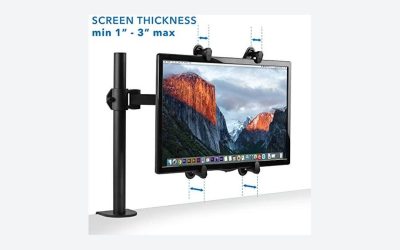
A 27-inch monitor typically needs about 24 inches of desk width and sits well on a standard 100x100mm VESA arm, which we recommend — mini-LED panels tend to be slightly deeper and heavier than edge-lit equivalents due to the backlight array, so check your arm’s weight rating before mounting. The 32-inch U32G4ZMN needs closer to 30 inches of width and a stronger arm or the included stand. Most of these panels draw modest power under 100W in typical gaming use, but HDR at high brightness increases consumption, so avoid daisy-chaining them through underpowered USB hubs. White models like the Q27G4SLM/WS and M27T6S look superb in light-themed builds but show dust and fingerprints more readily.
Our Verdict
For most buyers, the AOC Q27G3XMN at around $230 remains the best mini led monitor for hdr gaming under 1000, full stop — it delivers genuine HDR1000 mini-LED performance at a price that leaves room in the budget for everything else. Competitive players should step up to the AOC Q27G4SLM/WS at around $300 for its 320Hz refresh and gorgeous white chassis. If you want the single most impressive display on this list and your GPU can handle it, the AOC U32G4ZMN at around $640 brings 4K/240 flagship performance far below the $1000 ceiling, and the KTC M27T6 at around $330 claims the brightest HDR certification of the group. Whichever you choose, every monitor here proves that real HDR gaming no longer requires a four-figure display.
FAQ
Is mini-LED really better than OLED for HDR gaming?
They excel differently. Mini-LED delivers very high peak brightness (HDR1000-class and above), which makes highlights like explosions and sunlight look spectacular, and it carries no burn-in risk for static HUD elements. OLED offers perfect per-pixel blacks with zero blooming but caps peak brightness lower and requires burn-in precautions. For bright rooms, long gaming sessions with static UI elements, and maximum HDR punch, mini-LED is the safer and often better-looking choice.
Do these monitors work with consoles like the PS5 or Xbox Series X?
Yes. The 4K models — particularly the AOC U27G4XM and U32G4ZMN — pair naturally with current consoles, which output 4K at up to 120Hz. The 1440p monitors also work, as consoles support 1440p output, but you will not use their full 180–320Hz refresh capability since consoles cap well below that. Console players wanting the best match should prioritize the 4K picks with HDR1000 certification.
What size GPU do I need to drive a 4K 240Hz mini-LED monitor?
Realistically, only current-generation high-end graphics cards can approach 240 frames per second at 4K in demanding titles, and even then often with upscaling enabled. Esports titles like Counter-Strike 2 or Valorant can hit those figures on less powerful hardware. If your GPU targets 100–150 fps at 4K, you will still enjoy the U32G4ZMN’s image quality, but the 27-inch 1440p options will produce smoother frame rates on the same system.
How long should a mini-LED monitor last?
Mini-LED backlights are rated for tens of thousands of hours — realistically a decade or more of typical gaming use before noticeable brightness degradation. The LCD panel itself is a mature, durable technology. Most manufacturers back these displays with three-year warranties; AOC and the other brands on this list offer standard coverage, so registering your purchase and keeping proof of the price you paid (for example, around $230 to around $640 depending on model) simplifies any future warranty claim.