If you play competitive shooters—Valorant, CS2, Apex Legends, Overwatch 2—you already know the pain: you’re watching every millisecond of input lag and motion clarity while the rest of the market pushes giant 32-inch panels that sit too far back for tight aim duels. A 27-inch 1440p OLED is the sweet spot. The pixel density sits around 109 PPI, so enemies are crisp at typical desk distances, and the 2560 x 1440 resolution is far easier to drive at high frame rates than 4K. OLED’s near-instantaneous pixel response eliminates the smearing that can make a peeking enemy a blur on faster LCDs.
The problem is choice. Nearly every brand now sells a 27-inch 1440p OLED at 240Hz, and prices have dropped to the point where you can get in for under $350—or spend $600 chasing the fastest refresh available. We’ve rounded up eight of the strongest options on the market for the 2026 competitive season, from budget-friendly picks to an outlier 500Hz monster, and ranked them for what actually matters in a shooter: response time, refresh rate, adaptive sync support, and ergonomics that let you dial in your setup.
As an Amazon Associate we earn from qualifying purchases at no extra cost to you.




Our Top Picks
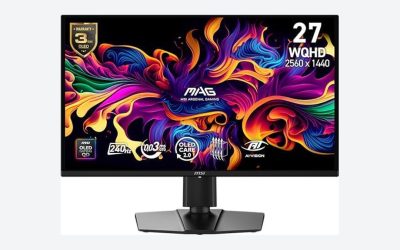
 msi MAG 274QP QD-OLED X24 27-Inch WQHD Gaming14" x 24" x 2.6"23.9 x 9.5 x 16.8 inches20.7 poundsCheck on Amazon
 Z-Edge 27 inch QHD 1440P OLED Gaming Monitor27 inches8.7 x 24 x 20.2 inches14.3 PoundsCheck on Amazon
 ViewSonic VX2738-2K-OLED 27 Inch QHD OLED Gaming Monitor9.84 x 24.06 x 15.79 inches11.9 poundsCheck on Amazon


Top 3 picks at a glance
Quick Picks
| Product | Best for | Price |
|---|---|---|
| MSI MAG 274QP QD-OLED X24 | Best overall value | Check on Amazon |
| LG 27GX704A-B UltraGear | Best HDR experience | Check on Amazon |
| Samsung Odyssey OLED G6 (G61SH) | Best premium brand support | Check on Amazon |
| Z-Edge 27″ QHD OLED | Best budget entry | Check on Amazon |
| ViewSonic VX2738-2K-OLED | Best no-frills performer | Check on Amazon |
| INNOCN 27″ QD-OLED 2780s | Best all-in-one with speakers | Check on Amazon |
| INNOCN GA27M1Q 500Hz | Best for refresh-rate chasers | Check on Amazon |
| AOC Agon Pro AG276QZD2 | Best esports pedigree | Check on Amazon |
How We Compared
Every panel here is a 27-inch OLED or QD-OLED running 1440p resolution with at least a 240Hz refresh rate and a rated 0.03ms response time—non-negotiables for competitive play. We prioritized adaptive sync compatibility (G-Sync Compatible and AMD FreeSync), modern connectivity like HDMI 2.1 for console-crossover players, and stands with height and tilt adjustment, since monitor positioning matters more than most players admit when tracking targets. We also weighed price-to-performance carefully; there’s no reason to pay a premium for specs you won’t notice at 1440p. Finally, we considered build quality and manufacturer reputation, since burn-in warranties and support policies vary widely across OLED panels and can make or break long-term satisfaction.
The 8 Best Picks
1. MSI MAG 274QP QD-OLED X24 — Best Overall Value
The MSI MAG 274QP QD-OLED X24 delivers the full competitive spec sheet—Quantum Dot OLED, 240Hz, 0.03ms response, Adaptive-Sync—with both HDMI 2.1 and DisplayPort 1.4a inputs, and its tilt/height adjustable stand means you can set it up properly out of the box. MSI’s QD-OLED implementation gives you richer color than plain OLED panels while keeping the near-instant pixel response competitive shooters demand. It’s the pick we’d recommend to most players who want flagship performance without flagship pricing.
- Full QD-OLED panel with 240Hz and 0.03ms response for tear-free, blur-free aim
- Height and tilt adjustable stand plus HDMI 2.1 and DP 1.4a connectivity
- No built-in speakers, so plan on a headset or external audio
Skip it if you specifically want an OLED burn-in warranty from a manufacturer with a longer track record in the OLED space—though at around $350, it’s hard to argue with the value.
2. LG 27GX704A-B UltraGear — Best HDR Experience
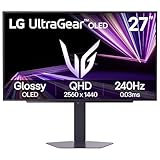
LG’s 27GX704A-B pairs its 240Hz OLED panel with VESA DisplayHDR TrueBlack400 certification, so between matches you get genuinely deep blacks and punchy HDR in supported games and media. Competitive credentials are intact: 0.03ms response, NVIDIA G-Sync Compatible, and AMD FreeSync Premium Pro mean it plays nicely with any GPU brand. HDMI 2.1 and DisplayPort cover both PC and console setups. If your gaming sessions stretch into single-player HDR titles after the ranked grind, this is the well-rounded pick.
- True Black 400 HDR certification for a genuinely cinematic second life
- Dual adaptive sync support (G-Sync Compatible and FreeSync Premium Pro)
- Costs about $50 more than comparable 240Hz panels without HDR certification
Skip it if HDR is irrelevant to you and you’d rather pocket the savings for a better GPU—the MSI or AOC deliver identical competitive specs for less.
3. Samsung Odyssey OLED G6 (G61SH) — Best Premium Brand Support
Samsung invented QD-OLED, and the 27-inch Odyssey OLED G6 (G61SH) brings that first-party expertise to a QHD gaming panel tuned for fast play. Samsung’s Odyssey line has long been a fixture in esports, and buying in means access to the company’s OLED care features and broad service network—worth something when your panel is a long-term investment. At around $450 it sits in the upper-middle of this group, but the brand support and panel pedigree justify it for buyers who value peace of mind.
- QD-OLED panel from the company that develops the technology
- Backed by Samsung’s established Odyssey esports pedigree and support network
- Pricier than equally fast competitors at around $450
Skip it if you’re purely spec-shopping on a budget—cheaper panels here match its core competitive numbers.
4. Z-Edge 27″ QHD OLED — Best Budget Entry
At around $340, the Z-Edge is the most affordable way into a true 240Hz 0.03ms OLED at 1440p, and the core specs are exactly what a competitive player needs: instant pixel response, high refresh, QHD clarity. Z-Edge isn’t a household name in the monitor space, so expect a more basic feature set and stand, but if your priority is raw panel performance per dollar, this is the entry ticket. It’s a smart pick for students, secondary setups, or anyone upgrading from a 60Hz LCD who wants a dramatic jump without overspending.
- Cheapest 240Hz 0.03ms OLED in this roundup by a $10 margin
- Full QHD resolution keeps competitive image quality intact
- Less established brand support and likely a more basic stand and OSD
Skip it if ergonomics, warranty depth, or premium brand service matter to you—spend the extra $10 to $60 on a pick above.
5. ViewSonic VX2738-2K-OLED — Best No-Frills Performer
ViewSonic has decades of display experience, and the VX2738-2K-OLED strips away the extras to focus on what matters: a 27-inch QHD OLED panel running at 240Hz. There’s no fancy branding or bonus features inflating the price—it’s a straightforward, dependable competitive monitor from a company with strong customer support infrastructure. At around $430 it’s priced above the budget picks, so you’re paying partly for the brand’s reliability reputation. For players who want a set-it-and-forget-it panel from a company that answers the phone, this is a safe bet.
- Established manufacturer with strong support and warranty reputation
- Clean, focused spec sheet: QHD OLED at 240Hz with no distractions
- Costs $85 more than the MSI at identical competitive specs
Skip it if you’re chasing maximum value—the MSI MAG matches its numbers for $85 less.
6. INNOCN 27″ QD-OLED 2780s — Best All-in-One with Speakers
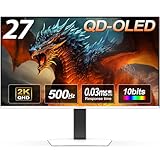
The INNOCN 2780s is the only panel here that bundles built-in speakers, a height/pivot adjustable stand, HDR400, and a bump to 280Hz in QD-OLED form. That pivot function is genuinely useful for competitive players who also stream or browse vertically. HDMI and DisplayPort inputs cover the bases, and the 0.03ms response keeps the OLED speed advantage. At around $450 you’re paying a bit of a premium over the 240Hz picks, but the extra refresh rate headroom and complete out-of-box package make it a strong all-rounder.
- 280Hz overclock over the standard 240Hz, plus built-in speakers
- Height and pivot adjustable stand—rare flexibility at this price
- $100 more than the fastest equally-specced budget picks
Skip it if you already have desktop speakers or a headset you love; put that $100 toward the AOC instead.
7. INNOCN GA27M1Q 500Hz — Best for Refresh-Rate Chasers
The GA27M1Q is the outlier: a QD-OLED panel pushing 500Hz at 1440p, G-Sync Compatible, for around $600. If you’re a serious CS2 or Valorant player with a GPU that can actually render 400-plus frames per second, the motion clarity difference is real—OLED’s instant response combined with double the standard refresh rate makes flicks and tracking feel noticeably more immediate. It’s a niche purchase, but for players who treat frame rate as a competitive weapon, nothing else in this roundup comes close.
- 500Hz refresh—more than double every other pick here
- G-Sync Compatible with QD-OLED color and 0.03ms-class response
- $250 premium over the cheapest picks, and most GPUs can’t fully feed it
Skip it if you play at 1440p with a midrange card—the 240Hz models deliver 95% of the experience for far less money.
8. AOC Agon Pro AG276QZD2 — Best Esports Pedigree
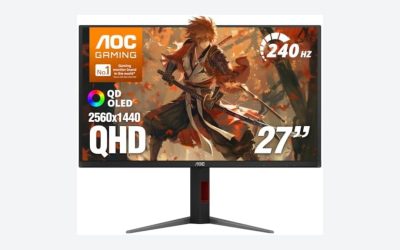
AOC’s Agon Pro line is a regular sight at esports events, and the AG276QZD2 brings that tournament DNA home with a 27-inch QD-OLED at 240Hz and 0.03ms response for around $350—the same price as our top value pick. The Agon Pro branding means tuning aimed squarely at competitive play, and AOC’s presence in the esports scene means the firmware and OSD reflect what actually matters in matches. It’s a direct alternative to the MSI for budget-conscious competitors who lean toward the Agon ecosystem.
- Esports-focused Agon Pro line with QD-OLED speed at a budget price
- Ties for the cheapest full-spec 240Hz QD-OLED in this roundup
- Stand ergonomics and extras may trail the height-adjustable competition
Skip it if you need built-in speakers or pivot functionality—the INNOCN 2780s covers those bases for $100 more.
Buying Guide
Refresh Rate: 240Hz vs. 500Hz
240Hz is the current standard for 27-inch 1440p OLED, and it’s genuinely enough for nearly all competitive players—it means the display redraws every 4.17ms, fast enough that your monitor is never the bottleneck at typical frame rates. The INNOCN GA27M1Q’s 500Hz is a real advantage, but only if your GPU can push 400+ FPS in your game of choice and you’re sensitive to the last few milliseconds. Most players should buy a 240Hz panel and invest the $150 to $250 savings in a better GPU.
Panel Type and Burn-in Protection
QD-OLED (MSI, Samsung, INNOCN, AOC) adds a quantum dot layer for brighter, more vivid color, while standard OLED (LG, ViewSonic, Z-Edge) offers its own excellent contrast. For gaming, both are superb; QD-OLED edges ahead in colorful scenes, standard WOLED can handle brighter highlights. Either way, plan for OLED care: vary your content, use taskbar auto-hide, and check the manufacturer’s burn-in warranty terms before buying—coverage ranges from one to three years depending on brand.
Ergonomics and Connectivity
For shooters, monitor position is a performance input: your eyes should level with the top third of the panel, roughly 20 to 30 inches away. A height-adjustable stand (MSI, INNOCN) matters more than most buyers expect, and if your stand lacks it, budget $30 to $50 for an aftermarket arm—check the VESA pattern first. On connectivity, DisplayPort 1.4a handles 1440p/240Hz on PC, while HDMI 2.1 keeps current-gen consoles viable at 120Hz. If you split time between PC and console, prioritize panels offering both.
Our Verdict
For most competitive players, the MSI MAG 274QP QD-OLED X24 at around $350 is the buy: full 240Hz QD-OLED speed, 0.03ms response, adaptive sync, HDMI 2.1 and DP 1.4a, and a height-adjustable stand at the lowest sensible price in the category. If you want an established esports brand at the same price, the AOC Agon Pro AG276QZD2 is the direct alternative. Spend up to the LG 27GX704A-B only if HDR matters to you outside of ranked play, and reserve the INNOCN GA27M1Q’s 500Hz for players with top-tier GPUs who genuinely need every frame. On a tight budget, the Z-Edge gets you true OLED competitive performance for around $340.
FAQ
Is a 27-inch 1440p OLED good for competitive shooters?
Yes—it’s arguably the ideal size and resolution. 27 inches at 2560 x 1440 gives you roughly 109 pixels per inch, sharp enough to spot enemies at typical desk distances without a scaling headache, and OLED’s 0.03ms response time eliminates motion blur that LCD panels can’t match at any price.
Do I need G-Sync or FreeSync for competitive play?
Adaptive sync eliminates tearing and stutter without adding meaningful latency, so yes, it’s worth having—especially since every panel in this roundup supports it in some form. If your frame rate dips below your refresh rate during heavy fights, adaptive sync keeps the image smooth instead of tearing.
Will an OLED monitor get burn-in from gaming?
Modern OLED panels include pixel-shift, logo dimming, and refresh cycles that make burn-in unlikely with varied content, but static HUDs over thousands of hours carry some risk. Look for a manufacturer burn-in warranty—one to three years depending on brand—and use the built-in panel care features.
Is 240Hz enough, or should I wait for 500Hz?
240Hz is more than enough for the vast majority of players; the difference to 500Hz is real but subtle, and only usable if your system renders 400+ FPS consistently. Buy a 240Hz OLED now and upgrade your GPU instead—the performance gain per dollar is far better there.