Integrating a dedicated sim racing cockpit into a living space or home office requires a careful balance between high-performance visual hardware and spatial design. A race rig pinned to an aluminum profile chassis or a heavy oak desk demands a display that renders high-speed apex turns without visual clutter or bulky frames. Finding the best 1440p 240hz oled monitor for sim racing involves selecting a panel that delivers instantaneous pixel transitions while fitting the physical footprint, ambient lighting conditions, and mounting specs of your room layout.
OLED and QD-OLED display technologies offer near-instantaneous response times and infinite contrast ratios, solving the motion blur issues that plague traditional LCD panels during fast cornering. As interior setups move toward cleaner aesthetic integration in 2026, selecting the right monitor comes down to balancing display geometry—from standard 27-inch flat screens to immersive 49-inch 32:9 curved ultrawides—with your available room real estate and mounting options.
As an Amazon Associate we earn from qualifying purchases at no extra cost to you. Product prices and availability are accurate as of the date shown and are subject to change.


Top 3 picks at a glance
Quick Picks
| Product | Best for | Price |
|---|---|---|
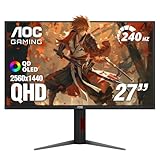
| AOC 27″ Gaming Monitor QHD 240Hz QD OLED NVIDIA G-SYNC Compatible Q27GAZDV | Best Value Budget Entry | $309.99 |
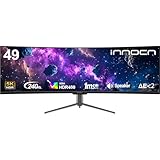
| INNOCN 49″ Curved DQHD 5120 x 1440P 240Hz 1800R Ultrawide Gaming Monitor | Best Ultrawide Field of View | $844.99 |
| msi MAG 274QP QD-OLED X24 27-Inch WQHD Gaming Monitor | Best Ergonomic Desktop Rig | $349.99 |
| AOC 27″ Gaming Monitor QHD 240Hz QD OLED NVIDIA G-SYNC Compatible Q27GAZD | Best Mid-Range 27-Inch Screen | $329.99 |
| ASUS ROG XG27AQDMGR 27 Inch 1440p 240Hz Glossy OLED HDR Gaming Monitor | Best Glossy Panel Clarity | $567.15 |
| KTC 32 Inch 240Hz Curved Gaming Monitor 1000R | Best Deep Arc Curvature | $299.99 |
| Samsung 27″ Odyssey OLED G6 (G61SH) QD-OLED Gaming Monitor | Best Premium Build Design | $449.99 |
| Deco Gear 49″ 5K QD-OLED Curved Gaming Monitor | Best Flagship Ultrawide Cockpit | $999.99 |
How We Picked
Evaluating monitors for sim racing requires analyzing physical ergonomics, chassis stability, panel geometry, and light control within a living space. Standard desk setups usually feature depths between 24 and 30 inches, making screen depth and stand footprint critical factors. A monitor with an overly wide base can force steering wheel clamps out of position or push the screen too close to your eyes, increasing fatigue.
We evaluated mounting flexibility using standard VESA 100x100mm patterns, total display weight (ranging from 10 pounds on 27-inch models to over 25 pounds on 49-inch ultrawides), and screen curves like 1000R and 1800R. Curvature impacts peripheral vision wrap in racing simulators while determining how far the monitor housing extends into your room. We also assessed panel surfaces, comparing glossy finish optical depth against anti-glare matte treatments under typical home ambient lighting.
The 8 Best Picks
AOC 27″ Gaming Monitor QHD 240Hz QD OLED NVIDIA G-SYNC Compatible Q27GAZDV
This AOC monitor brings high-speed QD-OLED display performance to a accessible $309.99 price point. Designed with a clean 27-inch flat panel profile, it integrates easily onto standard 24-inch deep desks without requiring heavy counterweights or specialized mounting arms. Its 240Hz refresh rate and G-SYNC compatibility ensure tear-free visuals during high-speed passes in simulation titles. The slim frame keeps your setup looking neat in dual-purpose home office rooms.
- Pro: Exceptional QD-OLED color and speed at an entry-level price point
- Pro: Compact footprint fits comfortably on small or medium desks
- Con: Flat 27-inch profile offers less peripheral view than curved ultrawides
Skip this monitor if your simulator rig relies on a curved wraparound layout to see side mirrors without moving the in-game camera.
INNOCN 49″ Curved DQHD 5120 x 1440P 240Hz 1800R Ultrawide Gaming Monitor
Spanning 49 inches with a 32:9 aspect ratio, this super-ultrawide monitor replaces multi-screen setups with a single curved glass panel for $844.99. The 1800R curve wraps around your field of vision, letting you spot apexes and adjacent cars naturally. Weighing over 22 pounds and spanning nearly 47 inches across, it requires a sturdy solid-wood desk or heavy-duty chassis mount to maintain stability during energetic wheel force-feedback spikes.
- Pro: Massive 32:9 screen replaces complex multi-monitor cable setups
- Pro: Smooth 240Hz motion clarity across a super ultrawide resolution
- Con: Large dimensions require a spacious desk or dedicated rig mount
Skip this display if your room layout cannot accommodate a desktop width of at least 48 inches.
msi MAG 274QP QD-OLED X24 27-Inch WQHD Gaming Monitor
The msi MAG 274QP QD-OLED X24 combines a 2560 x 1440 Quantum Dot OLED panel with an ultra-fast 0.03ms response time for $349.99. Equipped with HDMI 2.1 and DisplayPort 1.4a, it easily connects to high-end PCs or secondary gaming consoles. The included tilt- and height-adjustable stand allows for quick ergonomic tweaks, keeping the display aligned at eye level to reduce neck strain during long driving sessions.
- Pro: Ultra-fast 0.03ms response time eliminates motion blur in tight turns
- Pro: Height and tilt adjustments simplify ergonomic alignment on standard desks
- Con: Standard 27-inch width limits horizontal peripheral immersion
Skip this screen if you want a wide 32:9 field of view without using multiple monitors.
AOC 27″ Gaming Monitor QHD 240Hz QD OLED NVIDIA G-SYNC Compatible Q27GAZD
Priced at $329.99, the AOC Q27GAZD offers native 1440p resolution, smooth 240Hz frame transitions, and certified G-SYNC performance. Its minimalist exterior design fits modern interior decor, avoiding overly flashy accents. The QD-OLED panel produces true pitch blacks, perfect for night endurance races, while preserving shadow detail under ambient overhead lighting.
- Pro: Smooth variable refresh rate execution prevents visual stutter
- Pro: Deep black levels improve contrast in ambient room lighting
- Con: Slight price increase over the Q27GAZDV with identical core specifications
Skip this model if you already own a 27-inch 1440p OLED panel or prefer curved ultrawide dimensions.
ASUS ROG XG27AQDMGR 27 Inch 1440p 240Hz Glossy OLED HDR Gaming Monitor
Priced at $567.15, the ASUS ROG XG27AQDMGR features a glossy OLED panel finish that maximizes clarity and color depth. Unlike matte coatings that diffuse light, this glossy surface delivers vibrant highlights and deep blacks, capturing realistic dashboard textures and track reflections. Its sturdy chassis reduces wobble when attached to desks with clamp-mounted steering wheel setups.
- Pro: Glossy screen finish delivers remarkable image depth and clarity
- Pro: Rigid build quality minimizes screen shaking from force-feedback wheels
- Con: Glossy panel reflects bright ambient light sources or windows
Skip this display if your racing rig sits directly across from an unshaded window or bright lamp.
KTC 32 Inch 240Hz Curved Gaming Monitor 1000R
At $299.99, this 32-inch KTC monitor expands your visual field with an aggressive 1000R curvature. The tight curve pulls the edges of the 2K 1440p image toward your eyes, increasing peripheral immersion without taking up as much horizontal desk space as a 49-inch ultrawide. It offers an affordable middle ground between standard 27-inch flat screens and massive ultrawide monitors.
- Pro: Aggressive 1000R curve enhances peripheral vision on a 32-inch screen
- Pro: Exceptional size-to-price value for high-refresh 1440p gaming
- Con: Deep curve can distort straight lines in daily productivity software
Skip this option if you plan to use the monitor extensively for spreadsheet work or graphic design.
Samsung 27″ Odyssey OLED G6 (G61SH) QD-OLED Gaming Monitor
The Samsung Odyssey OLED G6 pairs high-end visual performance with modern industrial design for $449.99. Featuring a 27-inch QHD QD-OLED panel, it delivers rich color accuracy and 240Hz motion clarity. The slim metal stand uses minimal desk depth, leaving plenty of room for wheel bases, desk pads, and button boxes while keeping cables neatly organized.
- Pro: Sleek industrial aesthetic complements modern home office furniture
- Pro: Vibrant QD-OLED color rendition with quick pixel response times
- Con: Higher price point compared to standard 27-inch OLED alternatives
Skip this model if you want the absolute highest screen real estate per dollar spent.
Deco Gear 49″ 5K QD-OLED Curved Gaming Monitor
The Deco Gear 49-inch curved monitor offers a wide 5120×1440 resolution powered by QD-OLED technology for $999.99. Boasting a fast 0.03ms gray-to-gray response time and 240Hz refresh rates, it keeps high-speed racing scenery smooth and sharp. Its 32:9 aspect ratio wraps around your rig, removing the need for center bezels or multi-monitor setups.
- Pro: 49-inch 32:9 QD-OLED panel creates a complete cockpit view
- Pro: 0.03ms GTG response time prevents ghosting in fast-moving scenery
- Con: Flagship price tag requires a larger budget allocation
Skip this monitor if your graphics hardware cannot consistently drive a 5120×1440 pixel canvas at high framerates.
Buying Guide
Screen Size, Curvature, and Cockpit Ergonomics
Choosing between a 27-inch flat monitor, a 32-inch 1000R curved monitor, and a 49-inch 1800R super ultrawide depends on your physical workspace. A 27-inch flat monitor occupies roughly 24 inches of horizontal width, making it ideal for compact desks that are 24 to 30 inches deep. A 32-inch curved monitor with a 1000R arc brings the edges closer to your eye line, filling your peripheral vision while taking up about 28 inches of width.
For maximum immersion, a 49-inch 32:9 display spans almost 47 inches wide and weighs between 20 and 30 pounds. Mounting these larger ultrawide displays requires heavy-duty monitor arms or chassis mounts capable of holding up to 35 pounds to prevent sagging over time.
OLED Surface Coatings and Room Ambient Lighting
Room lighting plays a key role in choosing the right OLED panel coating. Glossy OLED surfaces deliver vibrant contrast and sharp highlights, making colors pop in light-controlled dark rooms. However, glossy screens can catch reflections from overhead lights, bright lamps, or windows directly behind you.
Matte and anti-glare OLED screens diffuse ambient light, reducing reflections in bright living spaces or home offices. While matte coatings can slightly soften perceived black depth under bright light, they keep the screen easy to see in rooms with variable sunlight.
Refresh Rates, Response Times, and System Demands
A 240Hz refresh rate combined with OLED’s instant pixel response times (as low as 0.03ms GTG) eliminates motion blur during fast driving simulation maneuvers. This combination ensures street markings, track curbs, and nearby cars remain sharp at high speeds.
Driving 240 frames per second at standard 2560×1440 QHD resolution requires a strong mid-to-high-tier GPU. Stepping up to a 49-inch DQHD display at 5120×1440 increases the rendering workload by nearly double. Make sure your graphics card supports DisplayPort 1.4a or HDMI 2.1 to handle these resolutions and frame rates without bottlenecking performance.
Our Verdict
For drivers looking for the best entry point, the AOC Q27GAZDV ($309.99) offers true QD-OLED performance and fast 240Hz speed at a great price. If you want maximum color depth and premium build quality, the ASUS ROG XG27AQDMGR ($567.15) provides brilliant glossy panel visuals, while the msi MAG 274QP ($349.99) delivers great ergonomic adjustment options.
Sim racers who want to eliminate bezel seams with a full wraparound cockpit view will love the super-ultrawide INNOCN 49-inch ($844.99) and flagship Deco Gear 49-inch ($999.99). Both replace multi-screen setups with a clean 32:9 display that transforms your racing rig into an immersive, streamlined driving station.
FAQ
Is 1440p resolution sharp enough for a 49-inch ultrawide sim racing monitor?
Yes. A 49-inch monitor with a 5120×1440 resolution provides the same pixel density as two 27-inch 1440p monitors side by side. It delivers crisp dashboards and clear track markers without taxing your graphics card as heavily as a full 4K display setup.
Do I need a heavy-duty monitor arm for a 49-inch curved OLED monitor?
Yes. A 49-inch display usually weighs between 20 and 30 pounds, with a forward-leaning curved center of gravity. Standard monitor arms often tilt downward under this weight. Look for a heavy-duty arm rated for at least 35 pounds with a locking tilt mechanism.
How do gloss and matte OLED screen coatings affect glare in a home office?
Glossy OLED coatings deliver sharper visuals and deeper perceived black levels, but they reflect direct room lights and open windows. Matte coatings diffuse incoming room light to eliminate harsh reflections, making them better suited for bright or multi-use rooms.
Why is a 0.03ms response time beneficial for sim racing?
OLED screens achieve near-instantaneous 0.03ms pixel transitions, far faster than traditional LCD screens (1ms to 4ms). This instant transition removes ghosting and blur behind fast-moving objects, keeping track edges, brake points, and nearby cars crisp during high-speed racing.