Our Top Picks
 SuperHandy Electric Wheelbarrow Utility Cart13"42.13 x 26.77 x 16.14 Inches101.5 PoundsCheck on Amazon


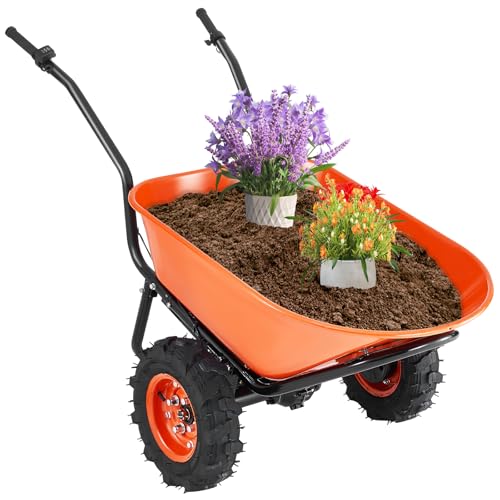
Top 3 picks at a glance
Best Electric Wheelbarrows for Tough Jobs
The best electric wheelbarrow for tough work is the one whose rated payload, usable battery capacity, tire setup, and dumping mechanism fit your actual routes—not simply the model with the biggest advertised load. For mixed garden and worksite use, compare powered drive and tipping together; for steep or muddy ground, prioritize traction, braking, and a conservative payload.
Compare the main choices by job
Electric wheelbarrows vary from compact, single-wheel garden carts to powered two-wheel machines and tracked carriers. The categories below are useful starting points; capacities and runtimes are representative buying targets, not specifications for a particular model. Check the manufacturer’s current manual before purchase, since ratings differ by machine and may change between versions.
As an Amazon Associate we earn from qualifying purchases at no extra cost to you.


| Machine class | Typical rated payload | Useful working runtime | Best terrain | Typical tipping arrangement |
|---|---|---|---|---|
| Compact powered garden barrow | 150–300 lb | 2–4 hours of intermittent work | Paths, lawns, and light slopes | Manual tub tilt |
| Powered two-wheel barrow | 300–500 lb | 2–5 hours of intermittent work | Uneven ground and moderate grades | Manual or assisted forward dump |
| Tracked electric carrier | 500–1,000+ lb | 1.5–4 hours of intermittent work | Soft soil, rough ground, and steep routes | Manual, hydraulic, or powered dump |
Runtime depends heavily on load, slope, surface, temperature, and how often the machine stops and starts. Treat advertised runtime as a best-case reference, not a promise of continuous hauling under maximum load.
Choose by load, route, and unloading point
| Your work | What to prioritize | Why it matters |
|---|---|---|
| Mulch, leaves, and garden waste on paths | Compact width, manageable weight, and a stable tub | A high-capacity machine can be awkward in gates and tight beds. |
| Soil or gravel over uneven ground | Payload margin, tire grip, and controlled braking | Loose material and ruts raise rolling resistance and make loads harder to control. |
| Repeated runs up a slope | Drive system, grade guidance, and battery capacity | Climbing uses substantially more energy than level travel and increases downhill risk. |
| Dumping into a raised bed or skip | Forward tipping angle and tub clearance | A machine that carries well may still leave material stuck or require lifting by hand. |
| Wet, soft, or deeply rutted ground | Tracks or wide tires, low-speed control, and conservative loading | Traction and ground pressure matter more than top speed. |
Calculate whether the battery will cover a shift
Compare battery energy in watt-hours (Wh), not amp-hours alone. Amp-hours only make sense alongside voltage: a 20 Ah battery at 24 V stores about 480 Wh, while a 20 Ah battery at 48 V stores about 960 Wh. Usable energy is lower than the label value because controllers reserve capacity and heavy work draws more power.
For a rough planning estimate, divide usable battery energy by average electrical draw. Suppose a machine has a 48 V, 20 Ah battery: 48 × 20 = 960 Wh. If you plan around 75% usable energy, that leaves about 720 Wh. At an estimated average draw of 400 W while hauling, the calculation is 720 ÷ 400 = 1.8 hours of powered travel and work. Stops may extend elapsed time, while steep slopes or near-maximum loads may shorten it.
Use this as a comparison method, not a runtime guarantee. If your work involves repeated climbs or a full day of hauling, look for a removable spare battery, a published replacement-battery cost, and a realistic charging time. Confirm whether the battery can be charged off the machine.
Terrain handling: tires, tracks, and control
Wheels suit firm ground and mixed routes
Two-wheel designs can feel steadier when carrying a heavy load, while a single-wheel layout may turn more easily in narrow spaces. Pneumatic tires cushion bumps and often grip better on uneven ground, but can puncture. Solid tires avoid flats, though they transmit more vibration and may slip more readily on loose or wet surfaces. Check tire width, tread, replacement availability, and whether the machine has a parking brake.
Tracks help on soft ground, but do not remove every limit
Tracks spread weight across a larger contact area and can improve progress on soft soil or rough slopes. They add bulk and can make turning harder, especially on finished lawns. Ask about the recommended maximum grade, how the machine behaves while descending, and whether it can stop securely on a slope. A claimed climbing angle is not a substitute for safe operation with a load.
For any terrain, compare the maker’s grade limit with your route, then leave a margin. A wet incline, off-center load, or sudden turn can make a machine unstable even when the slope is within a published limit. Keep loads low and centered, and avoid side-hill travel where practical.
Inspect the tipping design before buying
Manual tipping is simple and has fewer powered parts, but it still demands effort—especially with wet soil, gravel, or a high-sided tub. A forward-dump design is useful when the destination is directly ahead, such as a pile or skip. Hydraulic or powered tipping can reduce lifting, but adds weight, complexity, and another component that may need servicing.
- Check the dump angle: Sticky compost and damp soil need more clearance and a steeper discharge than dry leaves.
- Look at the tub’s balance: The pivot should let the load empty without forcing you to wrestle the handles.
- Test the receiving height on paper: Compare tub height and dump path with the edge of your trailer, skip, or raised bed.
- Ask how the dump locks: A positive latch helps prevent an accidental tip while moving.
- Consider cleaning: A removable tub or accessible dump hinge is useful when carrying cement mix, manure, or wet material.
Check payload claims against the material
Rated payload is a weight limit, not a volume guarantee. A tub may look full while already exceeding its capacity. As a planning example, a 3-cubic-foot load of damp topsoil at an approximate 80 lb per cubic foot weighs about 240 lb; the same volume of dry mulch at roughly 20 lb per cubic foot weighs about 60 lb. Actual density varies, so weigh a representative bucket or consult the material supplier if the limit is close.
Also include tools, attachments, and any material carried outside the tub if the manufacturer counts them toward the load. Repeatedly working at the maximum rating can reduce control and increase battery drain. For daily hauling, choose a machine with a meaningful payload margin.
Buying checklist for 2026
- Match the rated payload to the heaviest material you actually move, not just the tub’s volume.
- Check machine width against gates, paths, and storage space.
- Compare battery voltage and watt-hours, charging time, and spare-battery availability.
- Confirm terrain guidance, braking, and safe downhill operation.
- Choose tire or track type for your worst regular surface, not the easiest one.
- Inspect the dump angle, latch, and receiving height for your unloading point.
- Check warranty coverage, local service, replacement batteries, and wear-part availability.
For light garden chores, a compact wheeled machine is usually the sensible choice. For heavy, repeated hauling on mixed ground, a two-wheel powered barrow offers a practical balance if its payload and grip meet the route. For soft or rugged terrain and high loads, consider a tracked carrier—but confirm that its size, braking, and dumping system suit the site. The right choice is the one that completes the whole cycle safely: loading, travel, stopping, and unloading.
Frequently asked questions
What should I check before using an electric wheelbarrow on a slope?
Check the manufacturer’s grade limit, braking behavior, and safe downhill guidance before using it on a slope. Leave a margin below the published limit because wet surfaces, off-center loads, and sudden turns can reduce stability. Keep the load low and centered, avoid side-hill travel where practical, and confirm that the machine can stop securely before carrying material downhill.
Should I choose pneumatic or solid tires for an electric wheelbarrow?
Choose pneumatic tires for cushioning and grip on uneven ground, or solid tires when avoiding punctures is more important. Pneumatic tires can puncture, while solid tires transmit more vibration and may slip more readily on loose or wet surfaces. Also check tire width, tread, replacement availability, and whether the machine has a parking brake.
How can I tell whether a load is too heavy even when it fits in the tub?
Estimate the material’s weight rather than relying on how full the tub looks. Rated payload is a weight limit, not a volume guarantee. Damp topsoil can weigh much more than dry mulch in the same volume, and actual density varies. Include tools, attachments, and material carried outside the tub if the manufacturer counts them toward the load.
What should I know about charging the battery between work sessions?
Check the realistic charging time, spare-battery availability, replacement-battery cost, and whether the battery can be charged off the machine. Advertised runtime is only a best-case reference because load, slope, surface, temperature, and stopping patterns affect energy use. Repeated climbs or full-day hauling may require a removable spare battery rather than relying on one charge.
How do I know whether the wheelbarrow will fit where I need to use it?
Measure the machine’s width against gates, paths, tight beds, and storage space before buying. A high-capacity machine can be awkward in narrow areas, while a single-wheel layout may turn more easily in confined spaces. Also compare the tub height and dump path with the edge of the trailer, skip, or raised bed where the material must be unloaded.