Buy the exact same monitor model as a friend and you might get a visibly different panel: theirs flawless, yours with faint backlight bleed or a slightly warm corner. Enthusiasts call this the panel lottery, and it is a real consequence of mass manufacturing. Understanding it sets fair expectations and shows you how to inspect a new monitor and decide whether to keep it.
Why identical models vary
Panels are made in enormous volumes with tolerances, not perfection. Two units of one model can differ in backlight uniformity, color accuracy out of the box, the number of stuck or dead pixels, and coating texture. Manufacturers bin panels within acceptable ranges, so every unit passes their standard while still varying unit to unit. That variation is normal, though large defects should not pass.
What varies most
The table lists the common lottery factors, how visible they are, and whether they usually justify a return.
| Factor | How visible | Return-worthy? |
|---|---|---|
| Backlight bleed (IPS) | Dark scenes, corners | If severe or distracting |
| Dead/stuck pixels | Solid color fields | Per warranty threshold |
| Color uniformity | Full white/gray | If tint is obvious |
| Coating grain | Bright content, close up | Preference-based |
| VRR/overdrive tuning | Motion tests | Rarely, usually consistent |
How to check a new monitor
Run a defect sweep on day one
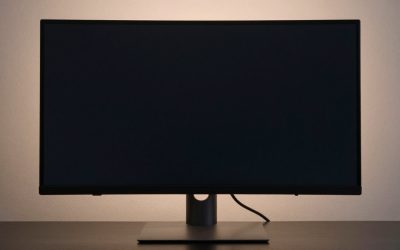
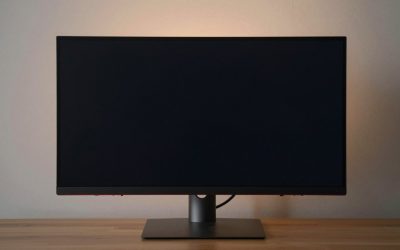
Display full-screen solid colors, black, white, red, green, blue, and gray, in a dimly lit room. Black reveals backlight bleed and IPS glow; solid colors expose stuck and dead pixels; white and gray show uniformity tints. Use a free online monitor test suite, and take photos so you can compare against the return policy and, if needed, submit evidence.
Judge in real use, not just torture tests
Some backlight bleed and IPS glow are normal and invisible during actual gaming or work, so weigh what you see in everyday content, not only worst-case black screens in the dark. If a flaw disappears in normal use, it is likely fine; if it nags you during regular sessions within the return window, exchange it. Testing early is key, since return windows are often only 14 to 30 days.
Panel variants under one model name
Sometimes the lottery is bigger than unit-to-unit tolerance: a manufacturer may source panels from more than one supplier for a single model over its production run, so two units can use genuinely different panels with different characteristics. Enthusiast communities track these variants, and a revision code on the box or in the menu can indicate which you have. If a specific variant is known to be better tuned, buying from a retailer with an easy return policy lets you check and exchange if you land on the weaker one.
Setting realistic expectations
No mass-produced LCD is perfectly uniform, and a small amount of bleed, glow, or corner tint is the norm rather than a defect. Reviews and sample photos usually show a good unit under ideal conditions, so your panel looking slightly less perfect in a dark room does not mean you got a lemon. Reserve returns for defects that intrude on normal viewing, breach the pixel policy, or clearly fall outside typical variation, and you will avoid an exhausting cycle of swaps chasing a flawless panel that mass production rarely delivers.
FAQ
Is some backlight bleed normal?
Yes, mild bleed and IPS glow in corners are common on LCD panels and usually vanish in real content. Only severe, distracting bleed that you notice during normal use is worth returning. OLED avoids this entirely with per-pixel light.
Should I keep exchanging until I get a perfect panel?
Not endlessly. Because of normal variation, chasing a flawless unit can mean many returns and worse luck. Keep a unit with only minor, use-invisible quirks; exchange only for clear, distracting defects or ones that breach the pixel policy.
Bottom line
The panel lottery is the real unit-to-unit variation in uniformity, pixels, and coating that comes with mass production, so identical models can differ. Test a new monitor immediately with full-screen colors in a dim room, photograph anything concerning, and judge flaws by whether they intrude on everyday use. Keep panels with minor, invisible-in-use quirks and return only genuine, distracting defects within your window.