Scroll through gaming monitor listings and you will see “Fast IPS” everywhere, usually attached to 144Hz and higher panels. It sounds like marketing, but there is a genuine technical difference between Fast IPS and the standard IPS in office monitors. This guide explains what changed, what it improves, and where it still falls short of OLED.
The problem Fast IPS solves
Traditional IPS panels have great color and viewing angles but relatively slow pixel response, often 5-8ms gray-to-gray. At high refresh rates that slowness causes ghosting, because pixels cannot finish changing before the next frame. Fast IPS is a refined liquid-crystal design tuned to switch more quickly, cutting response times toward 1-4ms and making high refresh rates actually clean.
What “fast” really refers to
Fast IPS keeps the color and angle strengths of IPS but improves the crystal switching speed and overdrive behavior. The result is a panel that can sustain 144Hz, 240Hz, or more with minimal ghosting, which standard IPS struggles to do. It is an evolution of the same core technology, not a different panel family.
Fast IPS versus the alternatives
| Panel | Response (GtG) | Contrast | Refresh strength | Best for |
|---|---|---|---|---|
| Standard IPS | ~5-8ms | ~1000:1 | Up to ~75Hz cleanly | Office, color |
| Fast IPS | ~1-4ms | ~1000:1 | 144-360Hz | Gaming + color |
| Fast VA | ~2-4ms (bright) | ~3000:1 | 144-240Hz | Dark-room contrast |
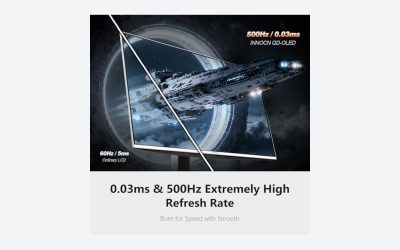
| OLED | ~0.03ms | Infinite | Any, flawless | Premium all-round |
Strengths and remaining weaknesses
Where Fast IPS wins
Fast IPS delivers the best blend of speed, color accuracy, and wide viewing angles at mainstream prices, roughly $250-500 for good 1440p high-refresh models. For competitive gamers who also value accurate color for content or creative work, it is often the smartest single-panel choice, avoiding OLED’s cost and burn-in worries.
Where it still trails
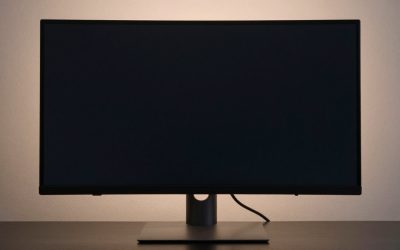
Fast IPS inherits IPS’s modest contrast around 1000:1 and the familiar IPS glow in dark scenes. In a dark room, blacks look grayish compared with VA or OLED. It also cannot match OLED’s near-instant response, though for the vast majority of players the difference is academic. Dark-scene contrast is the real compromise.
Should you buy one?
Choose Fast IPS if you want fast, colorful, angle-stable gaming without OLED prices or burn-in concerns, and you do not game exclusively in a pitch-black room. Choose VA if deep contrast in dark games is your priority and you can tolerate some smearing. Choose OLED if budget allows and you want the best motion and contrast together.
How Fast IPS compares in real gameplay
In practice, Fast IPS feels close to OLED for motion in most games while costing far less. The tiny difference in pixel response between a good Fast IPS panel and OLED is visible mainly in side-by-side pixel-transition tests, not in ordinary play, so competitive gamers rarely feel held back. Where you do notice the gap is in dark, atmospheric scenes, because Fast IPS still shows the raised black levels and glow common to all IPS.
That makes the choice situational. If you play a mix of fast shooters and colorful, well-lit games, and you value accurate color for creative side work, Fast IPS is the pragmatic pick that avoids OLED prices and burn-in worry. If you mostly play moody single-player titles in a dark room, the weak contrast will bother you, and a VA or OLED panel will satisfy more. Knowing your dominant use case settles the decision quickly.
FAQ
Is Fast IPS good for competitive gaming?
Yes. With 1-4ms response and high refresh support, Fast IPS handles fast shooters cleanly with minimal ghosting, while adding color accuracy and wide angles that pure-speed panels lack. Only OLED clearly surpasses it for motion, at a higher price.
Does Fast IPS have better contrast than standard IPS?
No. Fast IPS improves speed, not contrast; it still sits around 1000:1 native like other IPS panels and shows IPS glow in dark scenes. If contrast is your main concern, look at VA or OLED instead.
Bottom line
Fast IPS is a genuinely faster evolution of IPS that brings response times down to 1-4ms so high refresh rates run clean, while keeping IPS color and viewing angles. It is the value sweet spot for gamers who also want accurate color, with its only real weakness being the modest contrast and glow inherent to all IPS panels.