
Working from home has transitioned from a temporary dining-table setup to a highly optimized, permanent home office experience. As desk setups evolve to meet the clean, minimalist aesthetic demands of 2026, floating screens have become the gold standard. Elevating your monitor off your desktop not only reclaims valuable real estate but also aligns your screen with your natural line of sight, preventing neck strain and fatigue.
However, once you decide to purchase a monitor arm, you face a crucial structural question: Should you choose a desk clamp mount or a grommet monitor mount?
As an Amazon Associate we earn from qualifying purchases at no extra cost to you. Product prices and availability are accurate as of the date shown and are subject to change.
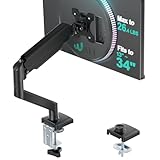


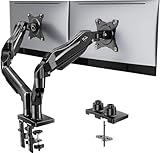
This decision is about more than just aesthetics. It dictates whether you will need to drill a permanent hole through your furniture, how close your desk can sit against the wall, and whether your desk can safely support the weight of your screens. While budget-friendly options like the Ergear Single Monitor Mount for 13-32 Inch Screens, 17.6 lbs Capacity ($19.99) or the heavy-duty WALI Adjustable Single Monitor Arm for 13-34 inch Screens, up to 26.4 lbs ($25.49) offer incredible ergonomic upgrades, choosing the wrong mounting style can damage your furniture or result in a shaky, unstable monitor setup. Let’s dive into the differences to help you choose the perfect mount for your home office.
Top 3 picks at a glance
Quick Verdict
If you live in a rental property, change your office layout frequently, or own a high-end solid wood desk that you refuse to drill into, the desk clamp monitor mount is your best option. It slips over the edge of your desk and tightens in minutes without leaving permanent marks.
If you want absolute maximum stability, need to push your desk completely flush against a wall, or are mounting a heavy ultrawide screen, the grommet monitor mount wins hands down. It distributes weight more centrally and utilizes an existing or self-drilled hole in your desktop for a ultra-secure, clean look.
Fortunately, many premium systems—such as the VIVO Single 13 to 38 inch Ultrawide Monitor Arm Desk Mount, Regular Screens up to 32 inches, 22 lbs capacity, Fully Adjustable Stand with C-Clamp and Grommet Base, Black, STAND-V001 ($34.99) and the HUANUO FlowLift™ Dual Monitor Stand, Fully Adjustable Gaming Monitor Desk Mount for 13–32″ Computer Screens, Full Motion VESA 75×75/100×100 with C-Clamp & Grommet Base, Each Arm Holds 4.4 to 19.8 lbs ($59.99)—include both mounting bases in the box, giving you the freedom to change your mind later.
Side by Side
Before exploring the specific benefits of each mounting style, let’s look at how they compare across key categories that matter to home office workers.
| Feature | Desk Clamp Monitor Mount | Grommet Monitor Mount |
|---|---|---|
| Installation Effort | Extremely easy; requires no tools or drilling. Tightens by hand or hex key in under 10 minutes. | Moderate; requires a pre-existing grommet hole or drilling a new 0.39″ to 3″ hole through the desk. |
| Desk Damage Risk | Low to moderate; can cause surface indentation or scratches if installed without protective padding. | High; requires a permanent, non-reversible hole drilled through the middle of your desktop. |
| Maximum Stability | High, but dependent on the strength of the desk’s edge. Subject to slight leverage wobble. | Superior; centered gravity and thru-bolt design offer maximum resistance to wobbles and vibrations. |
| Wall Clearance | Requires 2 to 5 inches of gap behind the desk to accommodate the clamp mechanism and articulating arms. | Can be mounted anywhere on the desk surface, allowing the desk to sit completely flush against the wall. |
| Price Range | $15 to $120 (Standard models are highly affordable). | $20 to $150 (Often sold as a dual-kit option with clamps). |
| Cable Management | Cables must run down the back edge of the desk, requiring sleeve routing to stay hidden. | Cables feed directly down through the grommet hole under the mount for a completely hidden look. |
| Weight Capacity Support | Excellent for single screens; can struggle with dual ultrawides if the desk edge is made of thin particle board. | Outstanding; safely handles heavy dual-arm setups and ultra-large displays by distributing load across a larger radius. |
| Resale Value of Desk | Preserved; removing the clamp leaves the desktop fully intact and unaltered. | Reduced; potential buyers may not want a pre-drilled hole in the middle of the desktop. |
| Best For | Renters, temporary setups, solid wood desks, and users who like to rearrange furniture. | Dedicated home offices, heavy ultrawide monitors, glass desks with pre-cut holes, and flush-to-wall desk layouts. |
Where Desk Clamp Monitor Mount Wins
The desk clamp (often referred to as a C-clamp) is the most popular monitor mounting style for a reason: accessibility. This mechanism works by sandwiching the edge of your desk between a flat upper plate and a lower screw-tightened bracket.
The primary advantage of a desk clamp is its non-destructive installation. Because it requires no drilling, you can preserve the pristine surface of an expensive solid wood desk or a leased workspace desk. If you decide to sell your desk or move to a new home, you simply unscrew the clamp, pack up your monitor arm, and leave the desk in its original condition. Entry-level models like the Ergear Single Monitor Mount demonstrate just how simple and non-invasive this process is for standard 13-to-32-inch screens.
Additionally, desk clamps are highly mobile. If you realize your screen is catching too much glare from a window, you can loosen the clamp, slide the mount six inches to the left, and retighten it in seconds. This flexibility is incredibly helpful for dynamic work environments where your seating position or desk accessories change over time.
Finally, clamp mounts are highly compatible with solid-core desks ranging from 0.4 inches to 3.5 inches thick. As long as your desk has a flat edge with no decorative bevels or under-desk privacy panels blocking the clamp, setup is completely hassle-free.
Where Grommet Monitor Mount Wins
A grommet mount secures your monitor arm by running a heavy-duty threaded bolt directly through a hole in your desktop, clamping the desk from above and below using wide metal reinforcement plates.
The standout benefit of a grommet mount is unmatched structural stability. Because the mount is bolted through the desk rather than clamped onto the edge, the center of gravity is positioned more centrally over the desktop. This eliminates the “lever effect” that can cause desk edges to warp or sag under the weight of heavy displays. If you are mounting a massive screen using a system like the VIVO Single 13 to 38 inch Ultrawide Monitor Arm Desk Mount (STAND-V001), a grommet installation offers peace of mind that your premium monitor will not tip forward.
Grommet mounts are also the ultimate solution for tight spaces. Because a desk clamp sits on the back edge of the desk, the clamping bracket itself—and the elbows of the articulating arms—often require several inches of clearance. This forces you to pull your desk away from the wall. A grommet mount can be positioned anywhere on the desktop, allowing you to push your desk completely flush against the wall to maximize floor space.
Lastly, grommet mounts offer the cleanest cable management possible. Many grommet bases are hollow or feature integrated wire channels, allowing you to route your power and display cables directly through the desktop hole and down to your surge protector, completely hiding unsightly cords from view.
Cost Over 5 Years
When calculating the true cost of a monitor mount, you must look beyond the initial price tag. High-quality mounts are surprisingly inexpensive; you can secure a robust single-arm setup like the WALI Adjustable Single Monitor Arm for $25.49, or a premium dual-screen setup like the HUANUO FlowLift™ Dual Monitor Stand for $59.99. However, the real financial variable is the potential wear and tear on your furniture over a five-year period.
With a desk clamp mount, the primary risk is concentrated pressure on the edge of your desk. If your desk is made of hollow-core particleboard (such as cheap honeycomb paper-filled desks), a tight clamp can crush the desk surface over time, requiring a full desk replacement ($150 to $500). To mitigate this, many users buy metal reinforcement plates ($10 to $15) to distribute the clamp’s pressure. Over five years, a clamp mount on high-quality wood has a net-zero furniture cost, but on cheap manufactured wood, it carries a moderate risk of desk damage.
With a grommet mount, the primary cost is the permanent alteration of your desk. Drilling a 2-inch hole into a high-end solid wood desk can immediately slash its resale value by 30% to 50%. Furthermore, if you do not have a pre-existing grommet hole, you will need to purchase a hole saw drill attachment ($12 to $18) to perform the installation. However, because grommet mounts distribute weight so evenly, they are highly unlikely to cause structural failure or cracks in your desk over a five-year span, making them a very safe choice for long-term setups.
Which One for Your Home
To determine which mounting style fits your lifestyle, let’s look at how they perform in common residential scenarios.
Small Apartment
In compact living spaces, every inch of floor space counts. If your desk is pushed up against a wall in your bedroom or living room, a grommet mount is the ideal choice. It allows you to position the mount closer to the center of your desk and run your monitor arms laterally, keeping your desk flush against the wall. However, if you are using a temporary, folding, or lightweight desk that you pack away when guests visit, a quick-release desk clamp is much more practical.
Family with Kids or Pets
If you have toddlers running around or cats that love to jump onto your workspace, stability is your top safety priority. A bumped desk can cause a clamp-mounted monitor to wobble aggressively or, in worst-case scenarios, slip off if the clamp wasn’t tightened correctly. A grommet mount provides an incredibly secure, tip-proof connection that can withstand heavy vibrations, pet collisions, and accidental bumps without budging.
Rental Home
For renters, protecting your security deposit is paramount. Drilling a permanent hole through a landlord-provided built-in desk or damaging expensive rental furniture is a recipe for extra fees. A desk clamp mount is the clear winner here. Simply place a small piece of rubber or cardboard under the clamp plates to prevent surface scratches, and you can enjoy a floating monitor setup with zero risk of lease violations.
Long-Term Home Office
If you own your home and have invested in a dedicated office space with a high-quality, custom-built, or solid-wood desk, a grommet mount offers the clean, integrated, executive look you want. It provides the ultimate aesthetic of “floating” screens with cables that disappear directly into the desktop, creating a distraction-free environment built to last for years.
FAQ
Can I use a desk clamp mount on a glass desk?
Generally, no. Clamping a monitor mount directly onto a glass desktop creates high, concentrated pressure on a very small surface area, which can cause the tempered glass to shatter. If you have a glass desk, look for a pre-cut grommet hole designed to handle accessories, or opt for a free-standing monitor stand instead.
What size hole do I need to drill for a grommet monitor mount?
Most grommet mounts require a hole diameter between 0.39 inches (10mm) and 3 inches (76mm). If your desk already has a standard plastic cable grommet hole (usually 2 to 2.5 inches in diameter), the mounting bolt and support plates included with most arms will easily fit without any additional drilling.
Can I convert a clamp mount to a grommet mount later?
Yes, if you purchase a dual-base monitor mount. Many popular models, such as the VIVO STAND-V001 and the HUANUO FlowLift™ Dual Monitor Stand, package both the C-clamp hardware and the grommet bolt/plate assembly in the same box. This allows you to start with a clamp setup today and convert to a grommet setup down the road if you upgrade your desk.
Will a desk clamp damage my wooden desk?
A desk clamp can leave indentations or scuff marks on soft woods (like pine) if overtightened. To protect your wooden desk, place a thin piece of wood, a silicone pad, or a dedicated steel reinforcement plate between the clamp and the desk surfaces to distribute the pressure safely.
Related guides
- Portable Monitor Usb C vs Hdmi Input for Gaming: Which Is Right for Your Home
- 38 Inch Ultrawide vs 42 Inch 4k Oled Gaming: Which Is Right for Your Home
- Single Heavy Duty Monitor Arm vs Dual Monitor Arm: Which Is Right for Your Home
- 1440p Ultrawide vs 4k Standard Monitor for Gaming: Which Is Right for Your Home


