The Wraith Prism is the better cooler of the two: it has heat pipes, a larger fan assembly and addressable RGB, and it is the one bundled with 105 W-class Ryzen 7 and 9 chips. The Wraith Stealth is a plain, compact cooler that is enough for 65 W Ryzen 3, 5 and some 7 chips at stock speeds. If your chip is rated at 105 W, use the Prism or buy a tower cooler.
This comparison covers what each AMD stock cooler is, which Ryzen chips they ship with, how they differ in cooling and noise, a worked power calculation, and when to replace either with an aftermarket cooler. Cooler ratings are not published by AMD, so the thermal figures here are community estimates and labelled as such.
Our Top Picks




Top 3 picks at a glance
Wraith Prism vs Wraith Stealth at a glance
| Feature | Wraith Prism | Wraith Stealth |
|---|---|---|
| Cooler class | Top-flow with heat pipes (reported 4 heat pipes; some sources differ) | Compact top-flow, aluminium fins with a copper core |
| Typical rating (third-party estimate) | About 105 W class | About 65 W class |
| RGB | Yes, addressable RGB ring and lit fan | No |
| Extra cables | USB header and RGB header connection for lighting control | Fan 4-pin only |
| Fan connector | 4-pin PWM | 4-pin PWM |
| Height | Taller; check case clearance | Shorter; fits small cases more easily |
| Ships with | Higher-end retail Ryzen chips such as the Ryzen 7 3700X and 3800X, and Ryzen 7 2700X | Retail Ryzen 3 and 5 chips such as the Ryzen 5 5600X, 5600 and 5500, and Ryzen 3 4100 |
| Noise under load | Moderate | Louder, since a small fan must spin fast |
AMD does not publish official TDP ratings for its bundled coolers, and third-party sources disagree on exact heat pipe counts and dimensions. Treat the rating row as a guide, and check the exact cooler name in your chip’s box or specifications.
What is the Wraith Prism?
The Wraith Prism is AMD’s premium bundled cooler, launched with the Ryzen 2000 series. It has a copper base, an aluminium fin stack with heat pipes, a 4-pin PWM fan and a programmable RGB ring plus lit fan blades. A USB header cable and an RGB header cable let you control the lighting from the motherboard or software. Some later boxes ship a slightly updated version.
Who gets a Wraith Prism?
It shipped with high-end Ryzen chips such as the Ryzen 7 2700X, Ryzen 7 3700X, 3800X and Ryzen 9 3900X. The Ryzen 9 3950X shipped without a cooler. Newer Ryzen 5000 and 7000 chips generally do not include a cooler at the high end.
What is the Wraith Stealth?
The Wraith Stealth is the basic bundled cooler for lower-power Ryzen chips. It is a compact, low-profile top-flow cooler with an aluminium fin stack, a copper core and a small 4-pin fan, with no RGB lighting. Third-party descriptions of its internals vary, so we do not state a heat pipe count. It was bundled with chips like the Ryzen 5 3600, Ryzen 5 5600X, Ryzen 5 5600 and Ryzen 3 4100.
Who gets a Wraith Stealth?
Retail 65 W Ryzen 3 and Ryzen 5 chips from the 2000 through 5000 generations. Some Ryzen 7 chips with a 65 W rating have also shipped with it, such as in certain boxed 8-core 65 W models.
Worked example: does the cooler match the chip?
On AM4, the maximum power a chip may draw from the socket (PPT) is about 1.35 times its TDP. That gives the heat the cooler must remove at full load.
| Chip TDP | Approx. PPT (TDP x 1.35) | Stock cooler match |
|---|---|---|
| 65 W | About 88 W | Wraith Stealth is adequate for gaming; louder at all-core loads. Prism is quieter. |
| 105 W | About 142 W | Wraith Prism is the minimum; a tower cooler is better. Stealth is not recommended. |
The Stealth’s estimated 65 W rating sits below the roughly 88 W a 65 W chip can pull in the worst case. In games the load is much lower, which is why the cooler works in practice but gets loud during renders. The Prism’s estimated 105 W class sits closer to the 142 W worst case of a 3800X or 3900X, so it works at stock but runs near its limit, which is why many owners swap it for a tower cooler.
Cooling performance and noise
In community comparisons the Prism generally holds a chip several degrees cooler at the same fan speed than the Stealth, or holds the same temperature at lower fan speed. Gaming temperatures for a 65 W chip on a Stealth are typically in the 60s to low 70s Celsius, but the fan can ramp up and become audible under sustained loads. The Prism’s larger fin area and heat pipes give lower noise at the same load. We did not measure either cooler, so treat these as general expectations rather than test data.
Prism and Stealth versus the other Wraith coolers
AMD made several Wraith models, and searches for the two here often really mean “which bundled cooler do I have”. The names below describe the common ones; availability depended on the Ryzen generation.
| Cooler | Position | Notes |
|---|---|---|
| Wraith Stealth | Entry | No RGB, compact, for 65 W chips |
| Wraith Spire | Mid | Larger than the Stealth; some versions have an RGB ring |
| Wraith Prism | High | Heat pipes, addressable RGB, for 105 W class chips |
| Wraith Max | High | Similar class to the Prism, bundled with some earlier Ryzen 7 boxes |
If you only know your chip name, look up its original retail box contents on AMD’s page. If a chip is listed as “with Wraith Prism LED cooler”, that is the cooler class AMD expected the chip to need.
How to install a Wraith cooler on AM4, step by step
- Check the pre-applied paste. Look at the base of the cooler: a grey pad or paste layer is normal. Do not touch it, and remove the plastic film if there is one.
- Lift the retention lever. On AM4, the mounting bracket is part of the motherboard. Keep the stock bracket in place, with the lever raised.
- Seat the cooler squarely. Hook the clip on one side, then the other, without twisting; twisting can smear paste and pull the chip out of the socket.
- Lock the lever. It should need firm pressure but not force.
- Plug in the fan header. Connect the 4-pin fan cable to the CPU_FAN header, not a case fan header, so the BIOS reads RPM and temperature correctly.
- Connect lighting for the Prism. Use the RGB header cable or the USB internal header cable. Without either, the Prism still cools but the lights stay on the default effect.
- Check temperatures at first boot. Idle temperatures of roughly 35 to 50 Celsius are common for Ryzen chips. If the idle reading sits above about 70, remount and check contact.
Fan curve settings that cut the noise
Zen chips spike in temperature for a moment when a program opens, and a fast-reacting fan curve makes the Stealth in particular sound like it is revving all the time. These settings in the BIOS or board software usually help:
| Setting | Value to try | Reason |
|---|---|---|
| CPU fan mode | PWM, not DC | Both coolers use a 4-pin PWM fan, so PWM gives the full speed range |
| Idle fan speed | About 30 to 40 percent up to roughly 55 Celsius | Keeps the cooler quiet for browsing |
| Ramp | Gradual between 60 and 80 Celsius | Avoids sudden jumps on short load spikes |
| Fan step-up delay or smoothing | Enable, 2 to 3 seconds if offered | Ignores brief temperature spikes |
| Full fan speed above | About 85 Celsius | Prevents throttling during long all-core loads |
These are starting values, not rules, since every case and chip behaves differently. Adjust in small steps and watch temperatures while gaming for 20 to 30 minutes.
Stock Wraith versus an aftermarket tower cooler
| Factor | Wraith Stealth | Wraith Prism | 120 mm tower cooler |
|---|---|---|---|
| Suited TDP class (estimate) | 65 W | 105 W | 150 W or more, model dependent |
| Noise under load | Highest | Medium | Lowest |
| Height | Shortest | Medium | Tallest, check case |
| RGB | No | Yes | Model dependent |
| Cost to add | Included with the chip | Included with some chips | Separate purchase |
Compatibility and fit
- Sockets: both mount on AM4 with the stock bracket. Check the box or maker’s page for AM5 support; AM5 boards use the same mounting holes as AM4, but not every older cooler version is listed as AM5 compatible, so verify before relying on it.
- Case height: the Prism is taller. In compact cases or SFF builds the Stealth is the safe fit.
- RGB headers: the Prism needs a motherboard RGB header or the USB header for lighting. Without the cables, it still works as a cooler.
- Thermal paste: both ship with pre-applied paste. If you remove and refit, clean the base and apply fresh paste.
When to replace a Wraith cooler
- The fan is loud at idle or in games: a tower cooler with a 120 mm fan runs slower and quieter.
- Your chip is 105 W class (Ryzen 7 3800X, Ryzen 9 3900X): a tower cooler gives more headroom for boost clocks.
- You want to overclock or run tuned PBO: the stock cooler cannot hold the extra heat.
- Your chip came without a cooler: a Stealth is the cheapest fix; a tower cooler is the better long-term choice.
Real-world scenarios: which cooler wins in each
Scenario 1: Ryzen 5 5600 for 1080p gaming
The chip is rated at 65 W and gaming rarely pulls more than a fraction of the roughly 88 W worst case. The Wraith Stealth that ships with it is enough, and the only complaint is fan noise when a game loads or a shader compile runs. A smoother fan curve fixes most of that. Spending on a tower cooler is optional.
Scenario 2: Ryzen 7 3800X for gaming plus streaming
Streaming with CPU encoding pushes all cores for long periods, which is exactly the load where the 142 W worst case shows up. The Prism keeps it stable at stock, but you will hear it. A 120 mm tower cooler here is a quality-of-life upgrade more than a necessity.
Scenario 3: a small mini-ITX or slim case
Cooler height decides the choice. The Stealth fits in more cases because of its lower profile. If the case limits you to a low-profile cooler anyway, buy a purpose-built low-profile model rather than stacking a tall Prism.
Scenario 4: a used chip with no cooler
Do not run a chip without a cooler, even to test boot; modern Ryzen chips throttle and shut down quickly, but a bare run is still risky. Buy a basic cooler first. A Stealth-class model is the cheapest option for a 65 W chip, and a tower cooler is the safer choice for anything above that.
Common mistakes with stock Wraith coolers
- Plugging the fan into a case fan header: the BIOS then cannot tie the fan speed to the CPU temperature.
- Peeling the pad and adding extra paste: a double layer of paste raises temperatures. Use one or the other.
- Forgetting the RGB cables on the Prism: the lights work only when connected to a header or the USB cable.
- Assuming the cooler is rated for overclocking: AMD designed both for stock operation.
- Mixing up the Stealth and Prism in listings: check the exact name in the title, since both are sold as loose parts and look different in photos.
Which one should you use?
| Your situation | Pick |
|---|---|
| 65 W Ryzen 5 for 1080p gaming, tight budget | Wraith Stealth is enough |
| Ryzen 7 3700X or 3800X in an ATX case | Wraith Prism at minimum; tower cooler preferred |
| Small case under about 70 mm of cooler height | Wraith Stealth, or a low-profile aftermarket cooler |
| You like RGB and want a matched cooler | Wraith Prism |
| Quiet PC | Neither; buy a 120 mm tower cooler |
Cooler options to consider
AMD Wraith Prism LED RGB cooler
The standalone version of the premium AMD cooler with the RGB ring and fan, for AM4 builds. It suits an owner of a Ryzen 7 or Ryzen 9 chip who lost the original cooler or bought a chip without one. Check case height and remember that AM5 compatibility should be confirmed before purchase.
As an Amazon Associate we earn from qualifying purchases at no extra cost to you.

AMD Wraith Stealth cooler
The basic AM4 bundled-class cooler with a 4-pin fan. It is a low-cost replacement for a 65 W Ryzen chip, and it fits small cases. It is not intended for 105 W chips.

Thermalright Peerless Assassin 120 SE
A dual-fan, six-heatpipe tower cooler that supports AM4 and AM5. It is a common step up from either Wraith cooler for quieter operation and better thermals on 105 W chips.
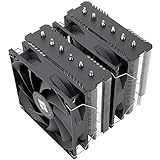
Thermalright Assassin X120 Refined SE
A single-tower, four-heatpipe cooler with one 120 mm PWM fan, a smaller and cheaper tower option than the Peerless Assassin. A good fit for 65 W chips where you want less noise than a Stealth.
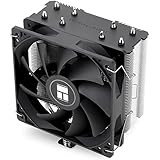
be quiet! Pure Rock Pro 3
A double-tower air cooler with two 120 mm PWM fans, rated by the maker at 250 W TDP. It suits users who want a quiet, high-capacity cooler for a hot 8-core or 12-core chip.

How we compared these coolers
This comparison is research-based. We did not use these products ourselves; the information comes from AMD’s product pages and published reviews, and thermal figures are described as approximate community estimates because AMD does not publish official ratings for its bundled coolers.
Wraith Prism vs Wraith Stealth FAQ
Is the Wraith Prism better than the Wraith Stealth?
Yes. It has a larger heat sink with heat pipes, runs quieter at the same load and adds RGB. The Stealth is simpler, shorter and enough for 65 W chips.
Can the Wraith Stealth cool a Ryzen 7?
A 65 W Ryzen 7 can run on it at stock, but temperatures and fan noise will be higher than with the Prism. A 105 W Ryzen 7 should not use a Stealth.
Does the Wraith Prism fit AM5?
The mounting holes are shared with AM4, but check the maker’s compatibility notice for your exact cooler version before relying on it.
Does the Wraith Stealth have RGB?
No. The Wraith Stealth has no lighting. Only the Prism and other Wraith variants such as the Spire RGB include it.
Which Ryzen CPUs come with the Wraith Prism?
Mostly higher-end Ryzen 2000 and 3000 chips such as the Ryzen 7 2700X, Ryzen 7 3700X, 3800X and Ryzen 9 3900X.
Should I replace the stock cooler?
If you want lower noise, run a 105 W chip, or plan to overclock, yes. For a 65 W chip at stock in a well-ventilated case, the stock cooler is acceptable.
Do I need to replace the thermal paste on a Wraith cooler?
No, they come with paste pre-applied. Only reapply paste if you remove the cooler, and clean the old paste first.
Why is my Wraith cooler so loud?
Small stock fans spin fast when the temperature spikes. Smooth the fan curve in the BIOS, clean dust from the fins, and check that the cooler is seated flat on the chip.
How hot is too hot on a Ryzen with a Wraith cooler?
Ryzen chips often reach the 70s Celsius during gaming and can boost to the 80s under all-core loads. Sustained readings in the 90s suggest a mounting or airflow problem.
Can I use the Wraith Prism on a Ryzen 9?
It shipped with the Ryzen 9 3900X, so it works at stock, but a tower cooler is better for sustained all-core loads.
Sources
- AMD, Wraith cooler product pages
- TechPowerUp, AMD Wraith cooler coverage
- Tom’s Hardware, Ryzen cooler reviews
- Cooler makers’ AM4 and AM5 compatibility notices
Last updated: October 2026